
Thailand Travel Guide
The Thailand Travel Guide for First-Time Visitors (2026)
A calm, practical first-timer's guide to routes, seasons, money, transport, etiquette and food — and how to build a Thailand trip that flows.
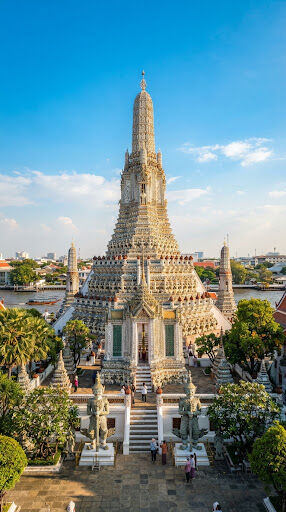
Choose a route, not a checklist
Most first trips work best with two or three bases rather than five or six. A common shape is Bangkok, then the north (Chiang Mai), then one stretch of coast.
Every move between bases costs most of a day. Fewer moves leave more room for the slow mornings Thailand is good at.
Seasons in brief
November to February is generally the coolest and driest period across much of the country. March to May is hot. The rainy season usually runs from around June to October, with showers that often come in short, heavy bursts.
The Gulf coast (Koh Samui and its neighbours) follows a different rain pattern from the Andaman coast (Phuket, Krabi), so the right beach depends on your month.
Money and getting around
Cards are widely accepted in cities and hotels, but markets, street food and small shops are mostly cash. Carry small notes.
In Bangkok, the BTS Skytrain, MRT and river boats are often faster than cars at rush hour. For longer hops, domestic flights, overnight trains and ferries all play a part.
Temple etiquette
Cover shoulders and knees, remove shoes where asked, and avoid pointing your feet at monks or Buddha images. A light scarf or sarong in your bag solves most dress-code moments.
Turn this into your own plan
Sabai shapes a day-by-day trip around your pace and budget.
Build your first-time route